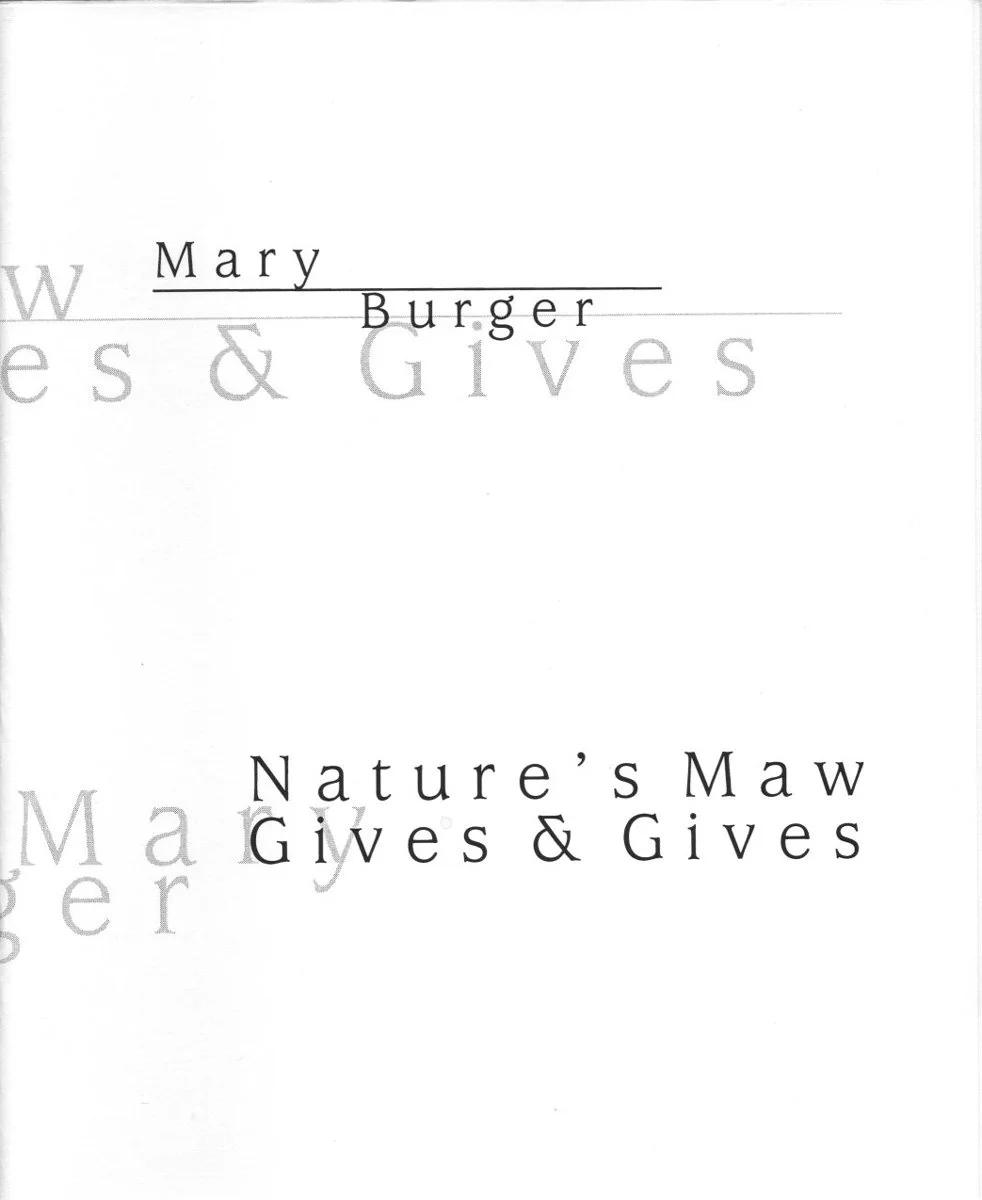
Nature’s Maw Gives and Gives
A collection of three poem series, Nature’s Maw Gives and Gives, Crisis Flotilla, and Your Golden Gate.
Praise
“The obligation of the living? Verify, in solitude, the veracity of perception. Resolve the discontents of desire and repulsion. Find value, pleasure, and significance. Or anything at all." (“Your Golden Gate”)
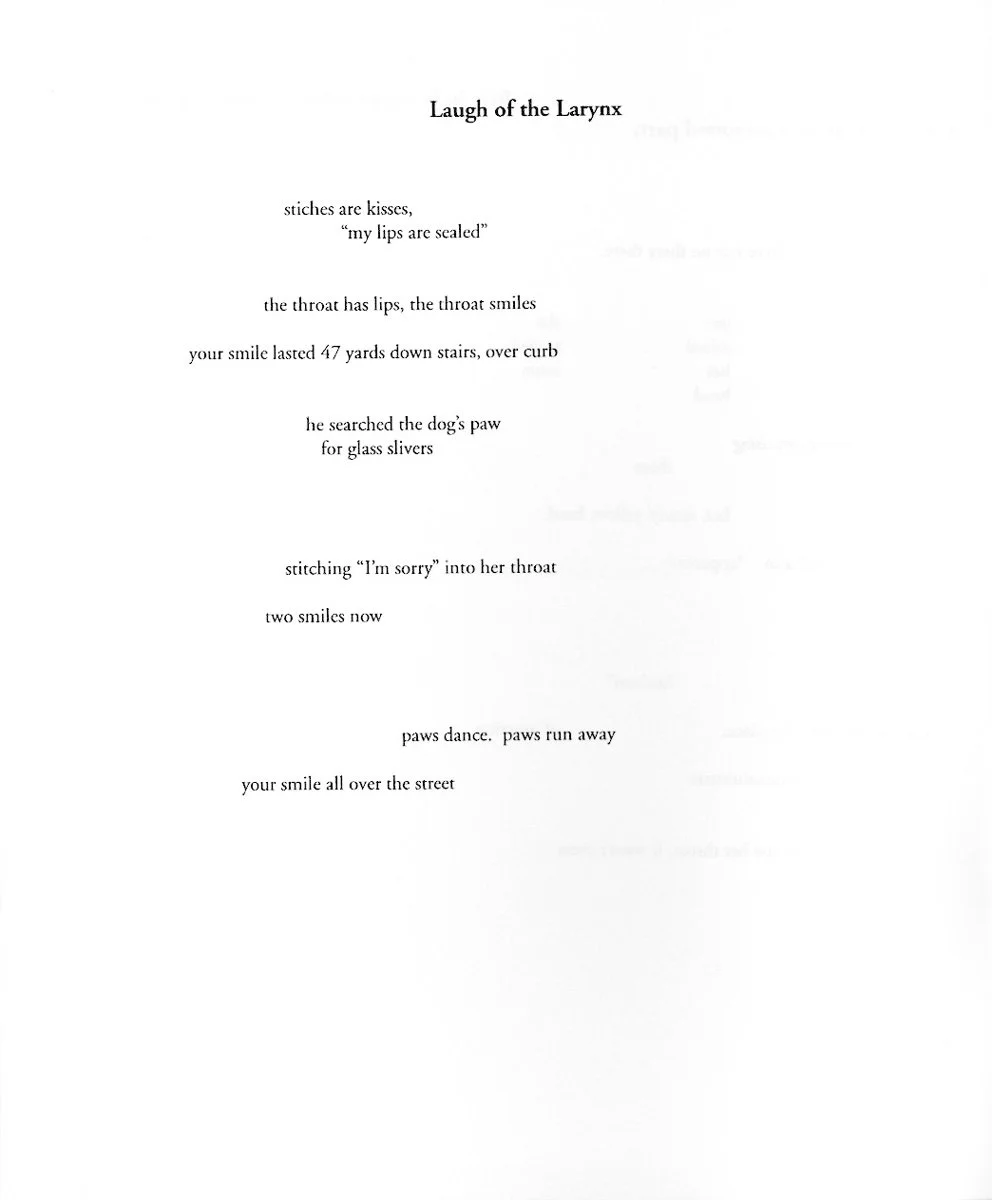
In this engaged, engaging chapbook an inquisitive speaker passes through gaps in syntax and faulty appearances to a set of philosophical problems as elusive as they are familiar. With acrobatic shifts in tone, Burger strikes an effective stance toward her difficult subject matter; an apparent cynicism in many of the poems is belied by a sense of opening often found in their closing lines. Here is “Wives and Husbands Rarely Say “I Love You””:
the smile often also means confusion or embarrassment
seen as an attractive quality.
“happy crying,” is a sign of life.
In the back streets of the well-known love hotels.
The resistant nature of affect is explored with almost clinical distance, and both the platitudes and the love hotels are well-known—but they proffer back streets, alleys where an unoccupied corner may still be found. This dark corner is the locus of Burger's investigations.
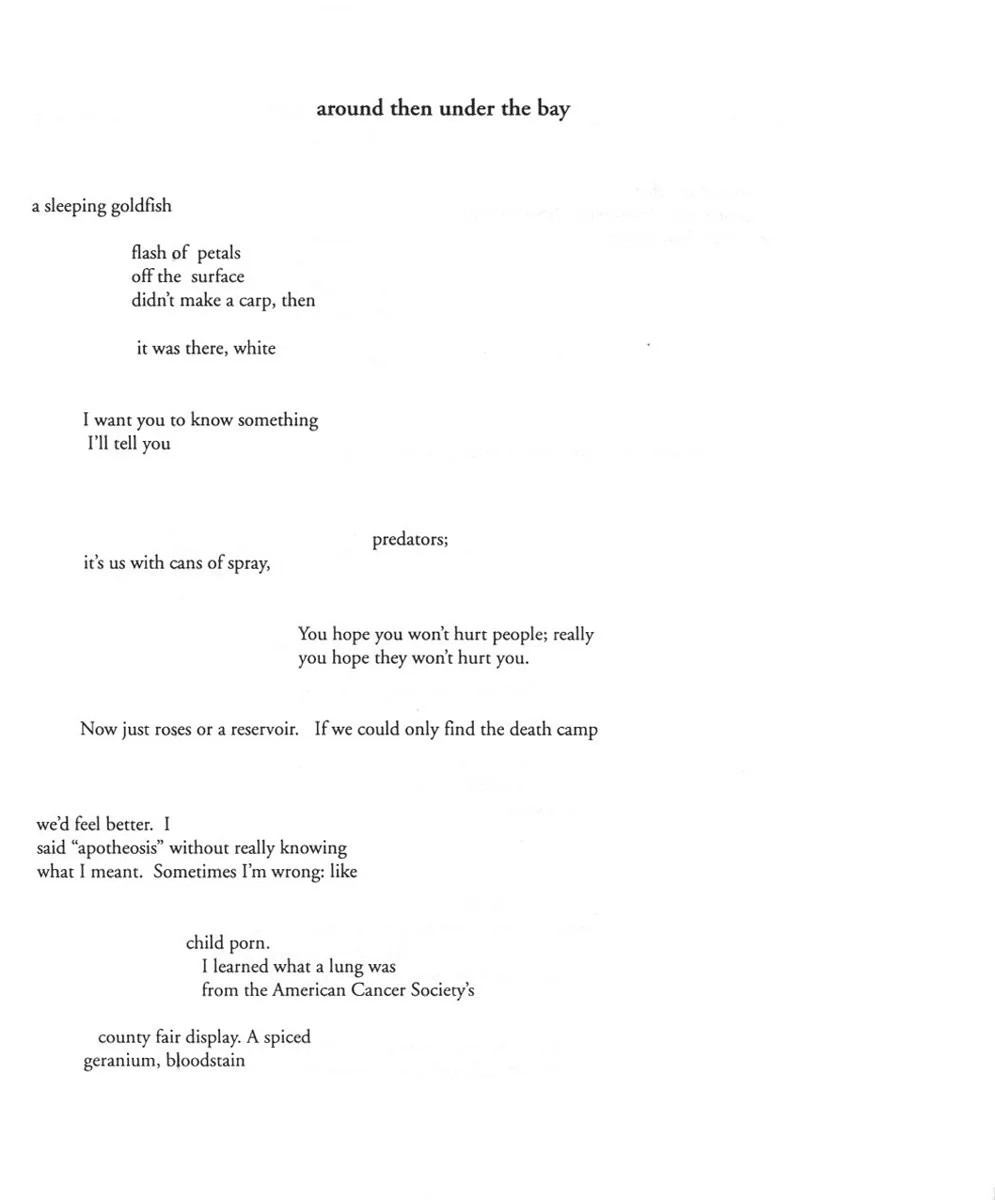
The striking lines “Sometimes I'm wrong: like/ child porn” occur in [the poem] “around then under the bay,” which seems to recall a conversation real or imagined against a watery backdrop, drawing on its connotative links to “surface” and “predator” (a word that reoccurs in a later poem). The poem speaks to a quest for something not surface-bound—attempts are doubled-over to reach beyond the superficial (and cynicism can be a purely superficial mode).
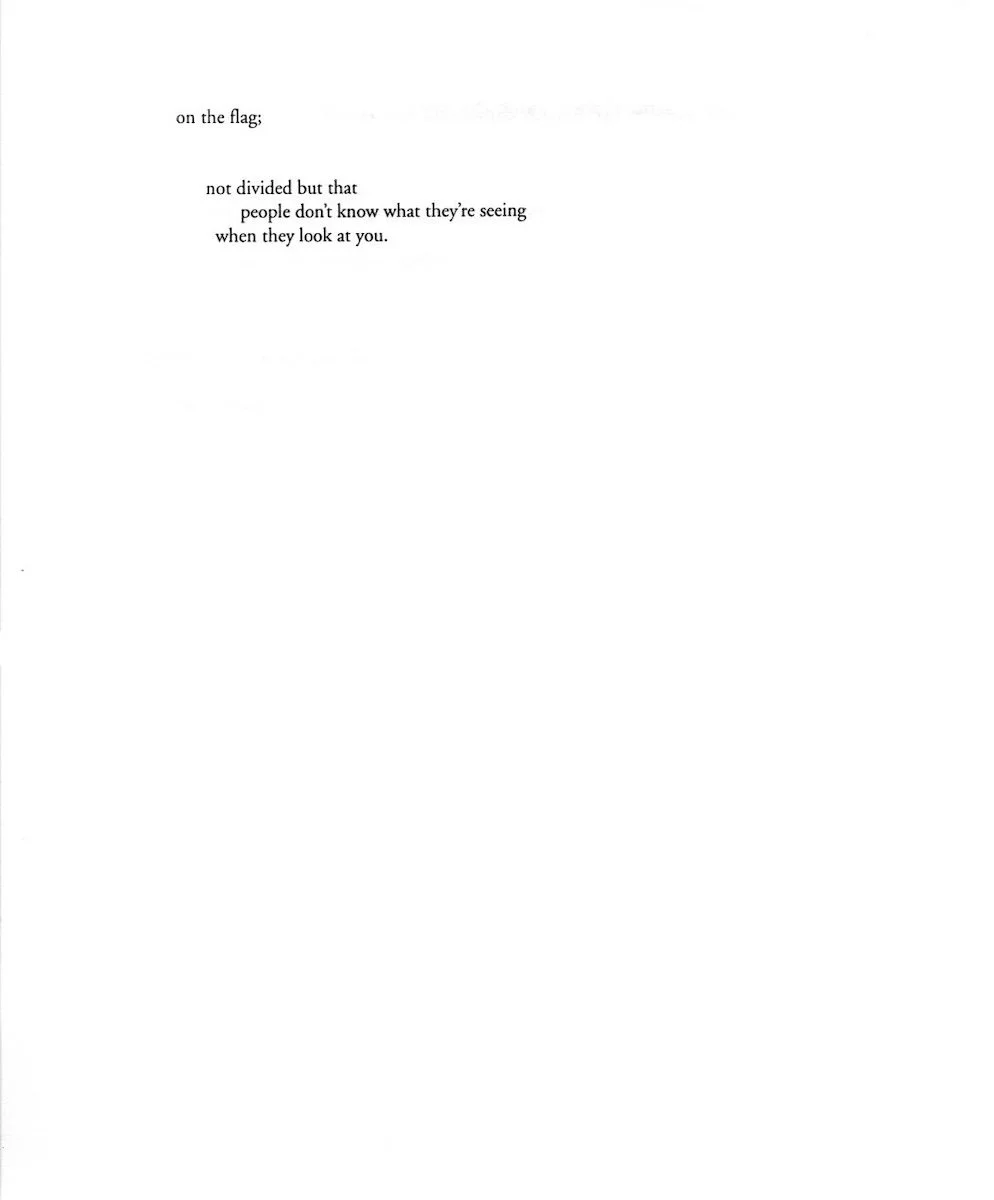
“l Want you to know something/ I'll tell you” points to how the small step from intention to action can accomplish this leap, whereas at other moments it is insight that is required: “You hope you won’t hurt people; really/ you hope they won't hurt you.” And consider the title: you first go around the bay, grazing its surface, and only then can you go under. Yet the thrust is not toward dualism, but “around then under” it, as well: “if we could only find the death camp/ we’d feel better”—clarity comes at a hefty price, and in this wistful phrasing it becomes a grotesque wish. “I said apotheosis without really knowing what I meant: sometimes I'm wrong: like/ child porn.” The richness of this move—epistemological to ethical, descriptive to normative—is the richness of this collection in general. One can use a word without really knowing what it means, but one risks to use the word “wrongly”: tossing this “wrong” into the stew with child pornography (which shares the death camp's role as an avatar for moral bankruptcy) bolsters the story of frustration that closes the poem—a frustration both at the way things seem and the way they are falsely described in dualistic terms: “not divided but that/ people don't know what they're seeing/ when they look at you.”
Throughout these poems Burger returns to the themes of knowledge, language, morality, agency, will. “Children/ the fiercest moralists. Repeat the obvious. Explain/ the dangerous..." (“Two Children, ‘Go’ and ‘To’”). But far more personal than these abstract notions, the poems are engaged in the struggle that occurs when one refuses solipsism and cynicism and faces the other (and the anxiety produced by this encounter): “down the corridor you're telling me,/’be Patient,’ and I'm like, “But you/ don't know what it's like for me.” // As if knowing would make it any easier. What to name the baby.” (Ibid.)
“l know what I like,” declares the speaker in the closing piece, “Your Golden Gate,” reminding us that some knowledge may be unassailable by nature. “Do we learn?” the poem goes on to ask, “or just change our clothes?” By the end of the poem (and the book) we've been led on a tour through the mental and emotional habitat of a subject moved by compulsion—to act, to question, and to reason— and then to question those acts, and questions, and reason itself. It is well worth the price of admission.
—Anna Moschovakis